

Wally’s, Wawa and Buc-ee’s are all building along Indiana’s I-65, and Sheetz says it’s next
Whitestown, Indiana, population nearing 16,000 and rising by the week, has not historically been the kind of place people plan a trip around. That changed, a little, on June 30, when a $40 million building opened on Interstate 65 with 84 fuel pumps, a bakery and electric vehicle chargers.
It is a gas station in the same sense that a cruise ship is a boat, technically true and entirely beside the point, and it is only the beginning of what is happening to this stretch of highway between Lafayette and Greenwood.
That building belongs to Wally’s.
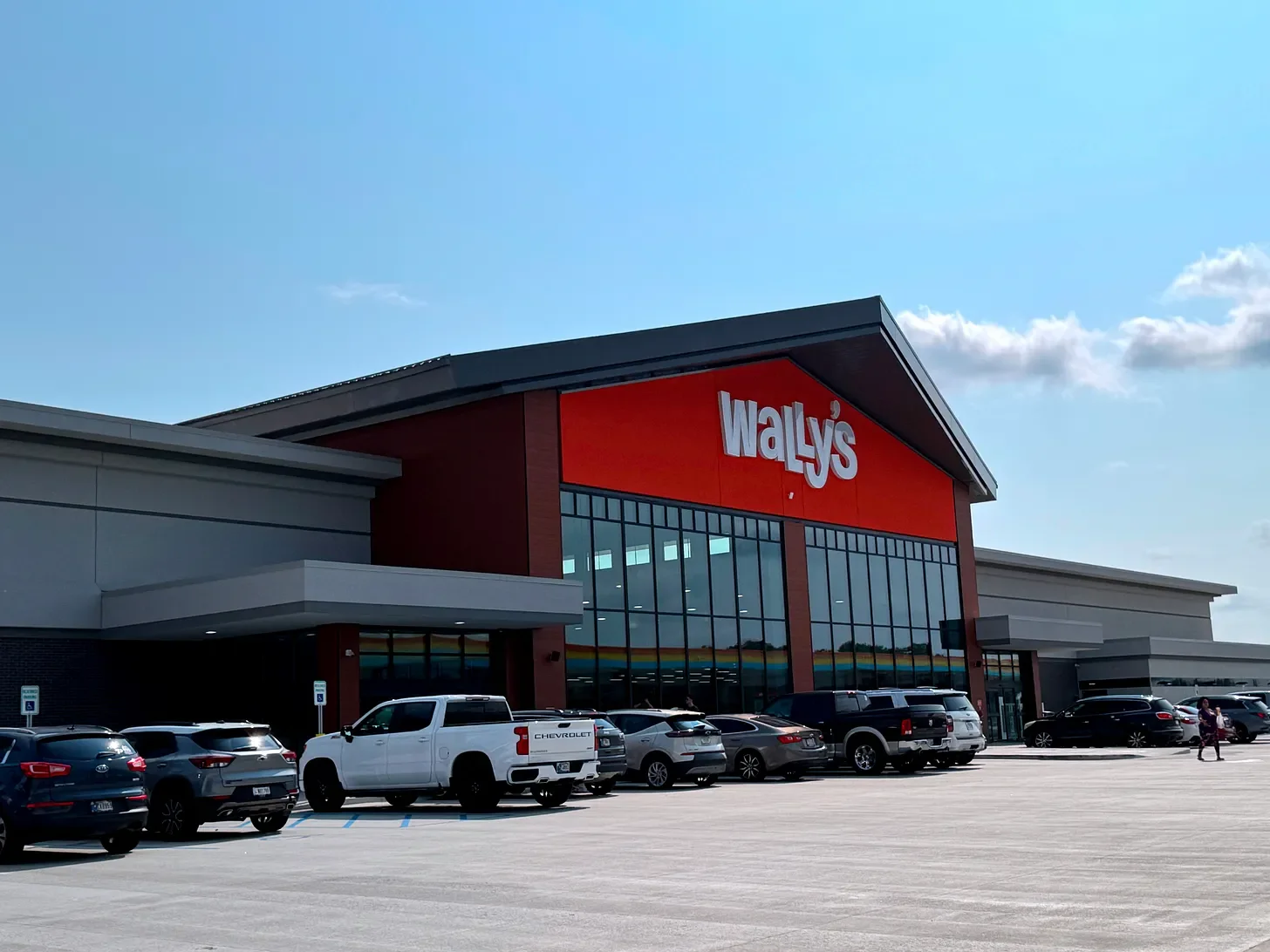
The exterior of Wally's newly opened travel center at 4155 Albert S. White Drive in Whitestown, Indiana, off I-65. The 53,000-square-foot location is Wally's first in Indiana and its largest to date.
“The opening builds upon the success of Wally’s locations in Pontiac, Illinois and Fenton, Missouri, and introduces the brand’s next-generation store format to one of the fastest-growing communities in Indiana,” the company said in a June 25 press release.
It is not alone. Wawa is mid-rollout across the same corridor, and Buc-ee’s has filed plans to join them both. Three national chains all converging on the same hundred miles of Interstate 65 at the same time.
They are betting on a semiconductor and advanced-manufacturing buildout on the other end of this highway, running from Lebanon’s LEAP district to Purdue’s backyard in West Lafayette, one worth more than 5,000 direct semiconductor-related jobs by 2030. What these chains are competing over is which one gets to feed and fuel the workforce that build-out is bringing to this corridor.
Not long ago, there wasn’t much to compete over. Exit 130 near Whitestown was, for years, ringed mostly by cornfields with a handful of gas stations, before a Meijer store arrived in 2014 and pulled the rest of the retail growth in behind it. The road itself has been widening to keep pace, in pieces, for the better part of a decade: a stretch near Lafayette went to three lanes each way back in 2018, the Boone County stretch near Lebanon followed in 2022 and another Tippecanoe County stretch closer to Lafayette was finished in 2024.
What is still missing is the middle: the Clinton County stretch between Frankfort and the Boone County line remains two lanes each way, the last unfinished piece of what would otherwise be a continuously three-laned interstate from Indianapolis to Lafayette. The pavement has been getting wider well ahead of the travel centers, not the other way around.
The Whitestown store is Wally’s first in Indiana and its largest to date at approximately 53,000 square feet, marking the company’s third state after Illinois and Missouri. The company was founded in 2020. Five years later it is breaking its own square-footage records off an interstate exit in Boone County.
Wawa got here first, though not on this stretch of highway. The Pennsylvania chain opened its first Indiana store in Daleville in May 2025, then followed with locations in Noblesville and Clarksville, the latter sitting right off I-65 near Louisville. Over the next five to eight years, the company said it plans to build eight to 13 stores a year in Indiana, more than 70 statewide, with each location representing over $7.5 million in investment and an average of 35 jobs once open
Lafayette is getting a peak at what that rollout looks like on the ground. One Wawa is already open with another to come. The first, at 3790 South St. and the corner of Creasy Lane, held its grand opening on June 24, one of nearly 100 grand openings Wawa is holding across 14 states this year.
It sits right next to Lafayette Pavilions, the busiest retail corridor in town. The second is planned for 3490 U.S. 52 S. near Veterans Memorial Parkway on the south side of the city, along the same U.S. 52 corridor that runs into I-65 rather than on the interstate itself; a firm opening date has not been announced.
Wawa was not even first to South Street. Leo’s Market and Eatery, a Greenfield-based chain built around food alongside the pumps, opened its own Lafayette location at 3431 South St. in January 2025, a few blocks from where the Wawa now stands.
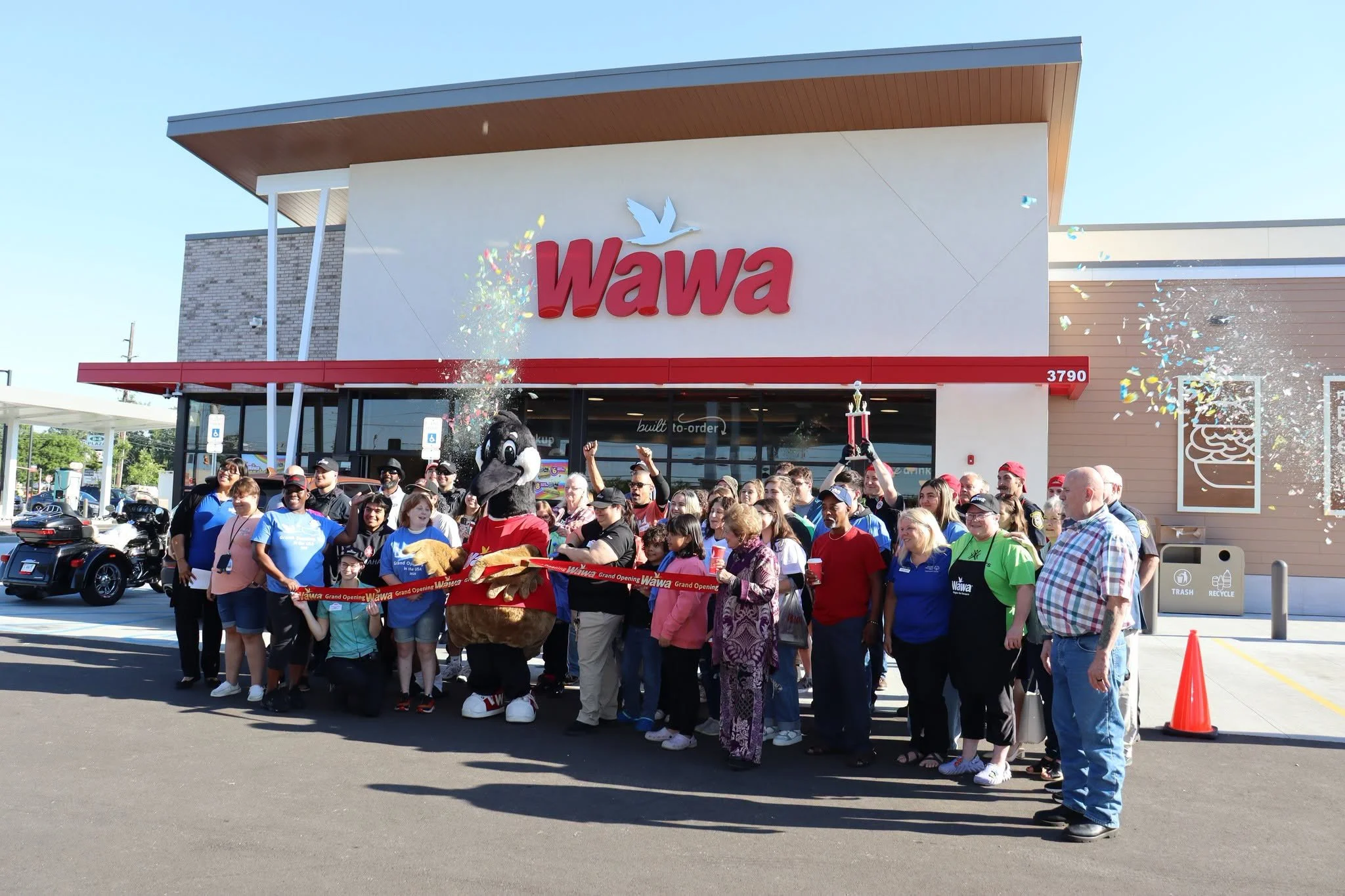
Wawa's grand opening celebration at 3790 South St. in Lafayette, Indiana, on June 24. The store is one of two Wawa locations planned for the city and one of nearly 100 grand openings the chain is holding across 14 states this year.
Greenwood is also getting two Wawas of its own, at Worthsville Road and U.S. 31 and near Emerson Avenue and County Line Road, which puts the city on a similar path to Lafayette’s.
Lafayette, for its part, has already moved to slow this down. In October, the city council unanimously passed a zoning ordinancerequiring new gas stations to sit at least 5,500 feet from any existing one, barring new gas stations from downtown and neighborhood business districts altogether and requiring decommissioning plans for stations, oil-change shops and car washes alike. Eight gas station projects already in the pipeline when the rule passed, including both new Wawas, were grandfathered in. They may be close to the last of their kind Lafayette allows.
Lafayette did not invent this idea. Kokomo passed nearly the identical rule the year before, also setting a 5,500-foot buffer between new stations after officials there counted close to 50 gas stations already inside city limits and decided, in the plan director’s words, not to add fuel to that fire, according to reporting by Kokomo Lantern.
Denver went further in 2025, banning new stations within a quarter mile of an existing one and citing a housing shortage rather than a gas station shortage. Petaluma, California, banned new gas stations outright back in 2021, the first American city to do so.
The reasoning behind these ordinances tends to repeat itself: too many stations chasing the same traffic, aging underground fuel tanks that can leak and cost a city millions of dollars to clean up later and a wave of stations expected to sit empty as electric vehicles cut into gas demand. Lafayette’s ordinance, with its decommissioning requirement for closed stations, is written with that last risk specifically in mind.
Buc-ee’s wants a piece of the Indiana market, too. The Texas chain, known as much for its restrooms as its brisket, has filed plans to rezone an 80.15-acre site at the southeast corner of I-65 and Worthsville Road in Greenwood, just south of Indianapolis, into what the city is calling the Hurricane Creek Park Planned Unit Development, plans a plan commission hearing has since moved toward approval.
The travel center itself would run about 74,000 square feet with 120 fueling positions and EV charging, but it is only half the project: the same site sets aside another 37 acres for up to 450,000 square feet of additional commercial, office and retail space, plus a regional drainage pond, walking trails and connections to Greenwood’s trail system.
The land is currently zoned Residential Large and sits vacant, used for agriculture. Construction alone is expected to take two years, which puts a realistic opening somewhere around 2028. The chain may not be done with Indiana, either. IBJ reporting has Buc-ee’s also eyeing a second Indiana site in Whitestown, the same town Wally’s just staked its claim in.
The rezoning has drawn pushback from neighbors worried about traffic, safety and converting agricultural land to industrial use, the same trade every one of these projects makes without quite saying so out loud: cheap land at an interstate exit, a promise of jobs and tax revenue, and a fight with whoever already lived nearby.
A fourth chain is lining up behind them. Sheetz announced in April it will invest nearly $1 billion to build 100 stores across Indiana over the next decade, starting with the Indianapolis area in 2027 and adding an estimated 3,000 jobs along the way. Lafayette will be one of those stops. No site has been made public yet, but the timing tells its own story: four national chains deciding, within about two years of each other, that Indiana is worth this kind of money.
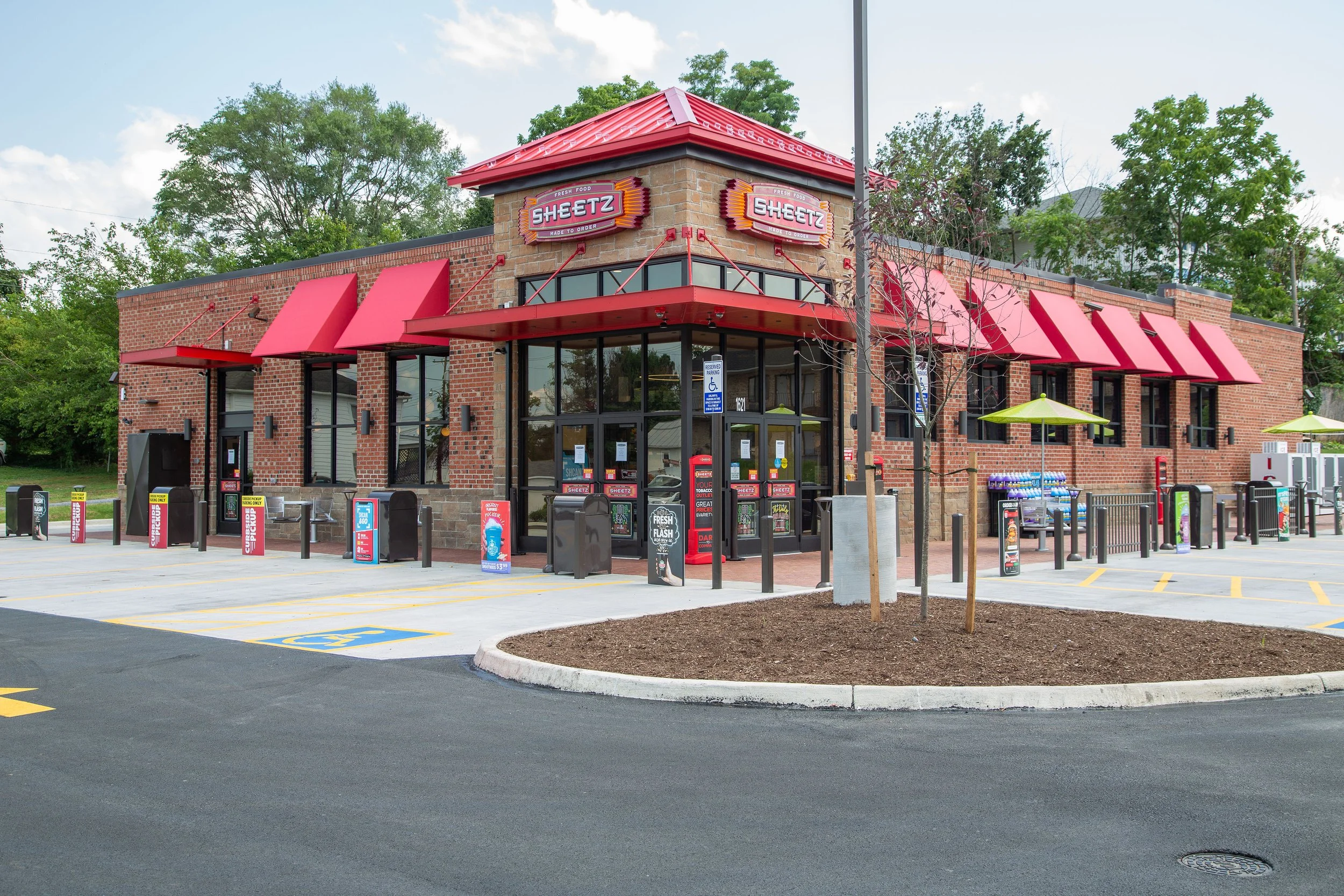
A Sheetz store exterior. The chain has not yet named specific sites for its Indiana expansion, though Lafayette is expected to be one of them.
A cluster of new gas stations rarely causes anything on its own. Site-selection teams at chains like these run their own traffic counts and rooftop projections before they buy land, so when three or four of them converge on the same stretch of highway within a couple of years of each other, it usually means they have all independently spotted the same thing coming down the road: people, paychecks and new employers.
Interstate 65 has always been a trucking and commuting corridor, but the answer to why chains are suddenly circling it sits about 15 miles north of Whitestown, in Lebanon. That is where the state has spent more than $690 million assembling the LEAP Lebanon Innovation District, roughly 9,000 acres marketed as the anchor of an “I-65 Hard Tech Corridor” running the 70 miles between Indianapolis and Purdue University.
Eli Lilly and Meta have already committed close to $18 billion in projects there, and the state’s own pitch leans hard on the district’s position squarely between the Purdue talent pipeline and the Indianapolis labor market. Purdue supplies the workforce; Indianapolis supplies the airport and the FedEx hub; Boone County supplies the farmland in between.
Whitestown, sitting on I-65 just south of Lebanon, is where a lot of that new workforce is going to sleep, shop and gas up.
The buildout does not stop in Lebanon, either. Thirty miles up the same interstate, at Purdue’s Research Park in West Lafayette, SK Hynix is building a $3.87 billion advanced packaging plant to manufacture the high-bandwidth memory chips that power AI systems. Plans call for a 430,000-square-foot facility on 90 acres, expected to create up to 800 jobs by 2030, with mass production set to begin in the second half of 2028.
The state’s incentive package for that single project, nearly $700 million, was the largest economic development deal in Indiana history at the time it was announced. Between LEAP and SK Hynix and thousands of jobs across the region by 2030, this is not a one-site story. It is two anchor projects, 30 miles apart on the same highway, both hiring at once.
Down at the other end of the corridor, near Greenwood, the equivalent buildout is not chips. It is data centers. Indianapolis has approved a $4 billion, roughly 900,000-square-foot data center campus in Decatur Township, and another two-building campus on the city’s east side, while a $1 billion Google data center proposed for Franklin Township was withdrawn last fall after a bipartisan bloc of City-County Councilors turned against it.
Johnson County, home to Greenwood, has not landed a data center of its own yet, but county leaders are already discussing how to be part of the conversation if one comes. Even Clinton County, sitting in that unfinished middle stretch of I-65 between Lebanon and Lafayette, rejected a 715-acre data center proposal near Frankfort in January. Whether it is chips in the north or data centers in the south, the pattern along this highway is the same: enormous capital, a handful of jobs relative to the investment and a fight with the neighbors almost everywhere it lands.
Set against that backdrop, the travel centers start to look like the visible tip of a much bigger wave of capital moving through the state. What is more interesting than the chains themselves is what they are competing on. None of the marketing language mentions fuel prices. It is bathrooms, coffee, “hospitality,” barbecue cut to order, EV chargers and walking trails.
The travel center used to be the place you stopped because you had no choice. Now it is being built as a destination, something people will get off the highway specifically to visit, the way earlier generations exited for a specific diner or motel.
What happens next is mostly paperwork. Greenwood’s council still has to vote on Buc-ee’s. Sheetz has not said where its Lafayette store will go. Wally’s has said nothing about whether Whitestown was a first stop or a one-off. The exits keep filling in regardless.