

Industry research consistently points to fewer than half of U.S. businesses having a real, documented crisis communications plan. Nobody notices until the day it matters.
CONTEXT

OUR APPROACH
A crisis is breaking news that happens to be about you. That’s exactly how we treat it. Get the facts. Get them out. Because the story is moving whether you're ready or not.
First things first, it’s not always a crisis.
Most business problems get solved with a phone call or a refund and are forgotten by Friday. One question tells you if it’s just a problem or a crisis.
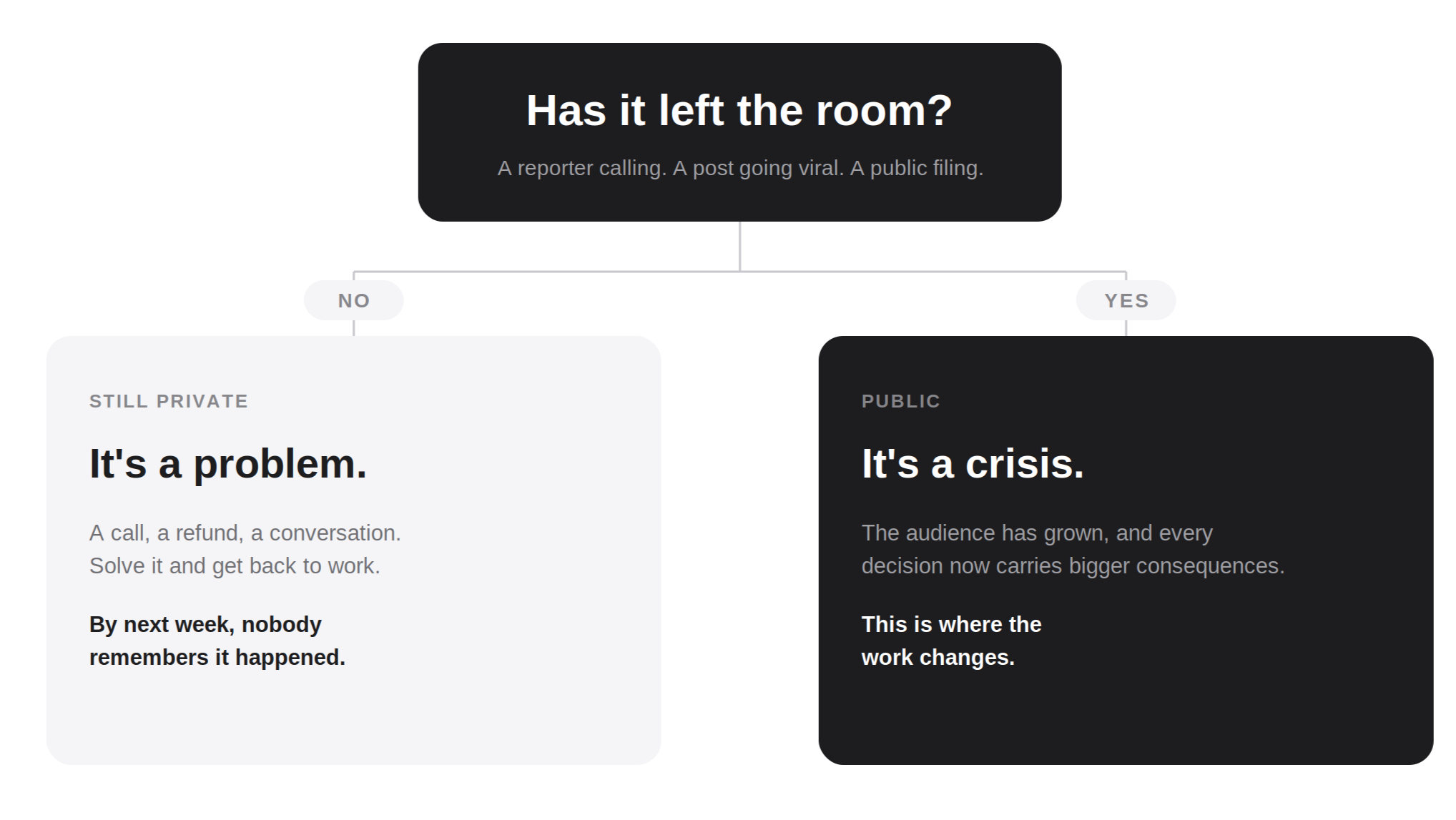

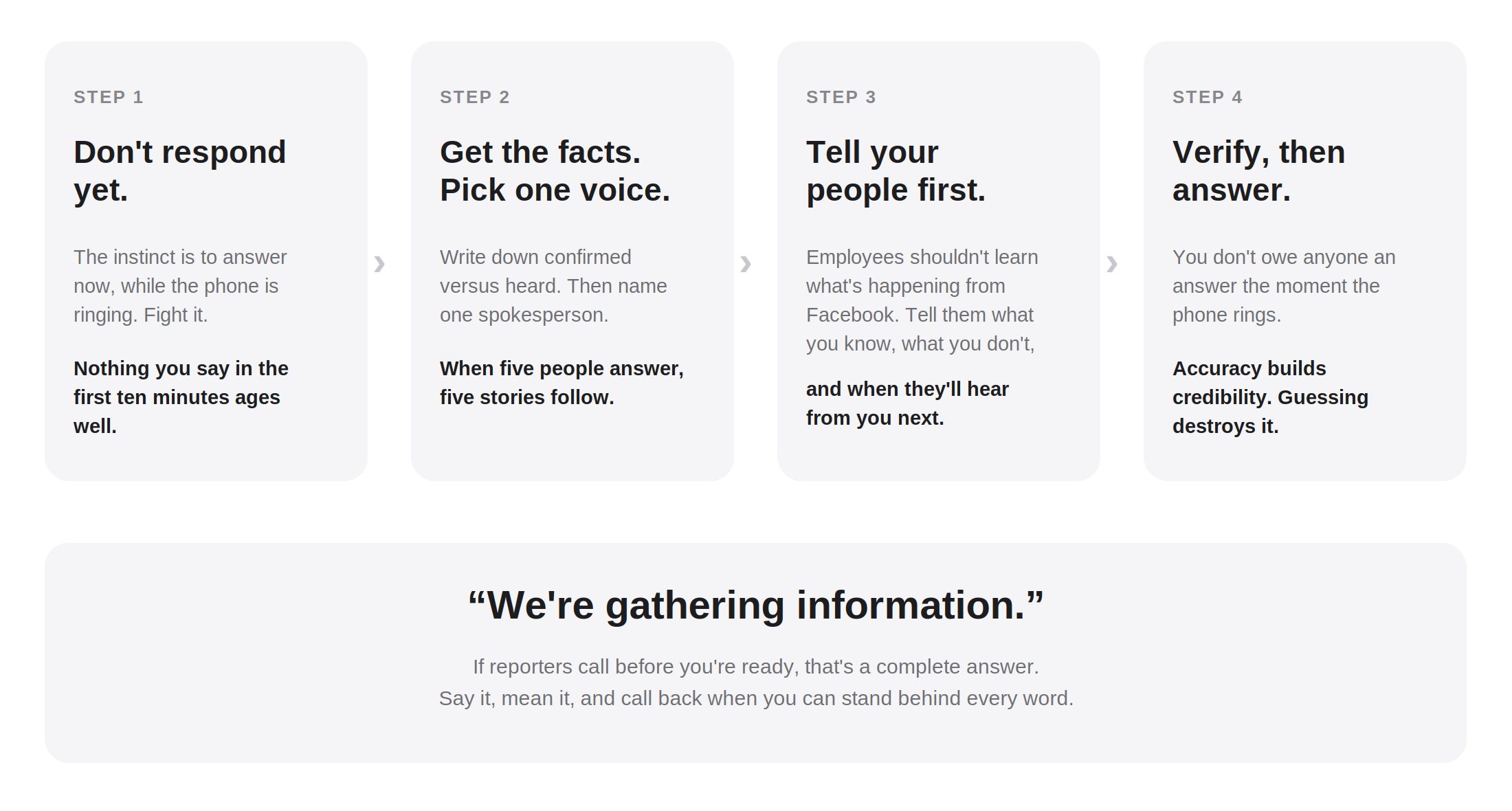
If it left the room, there’s a way through.
The first few hours after a crisis are usually the hardest. Good crisis communication should leave almost nothing to remember. When organizations communicate well, the story usually ends quickly.
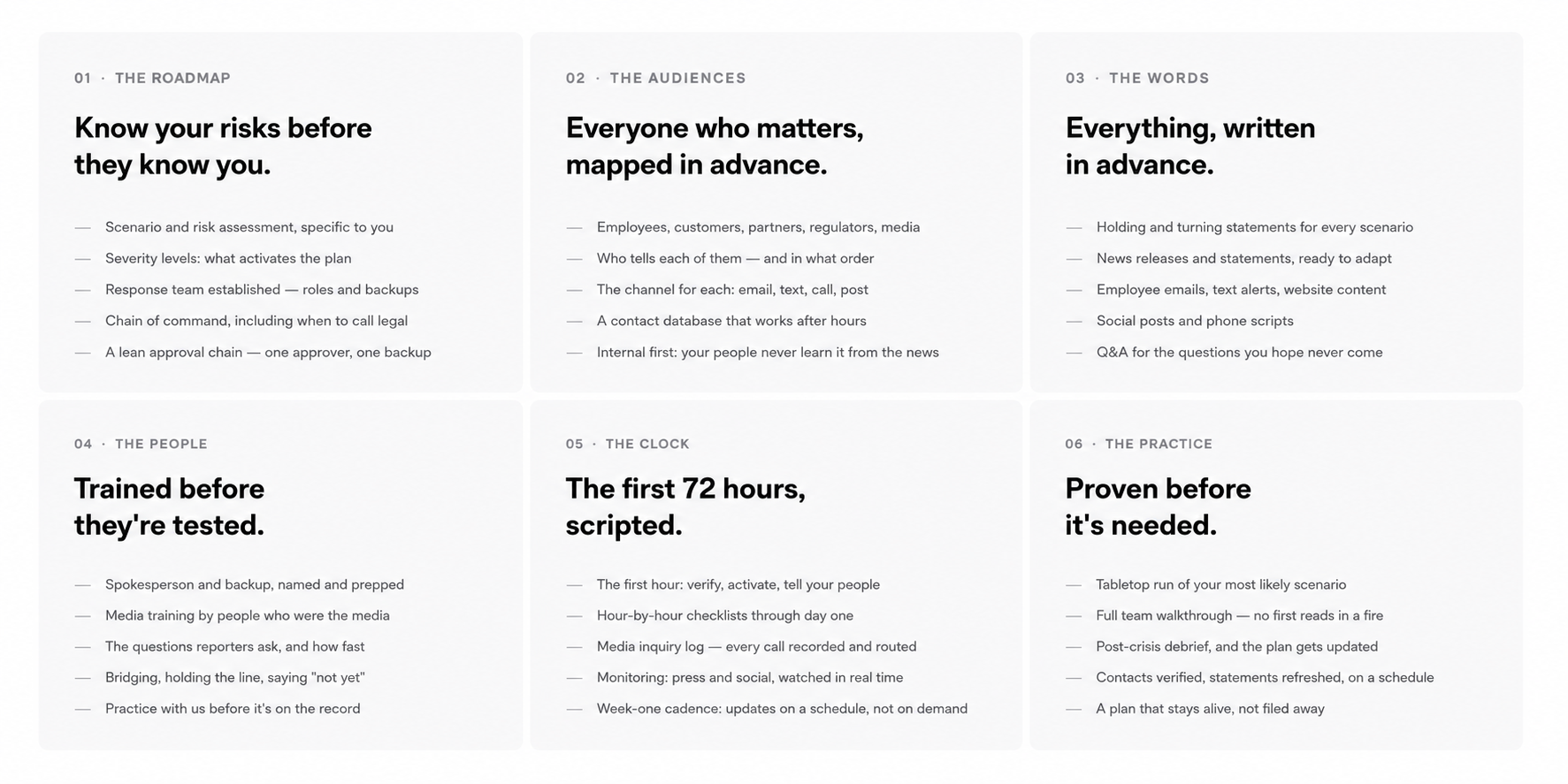
The plan, built before you need it.
The worst time to write a crisis plan is during one. So we build yours now, a working document your team can run to at 2 a.m., specific to your business —not a template with your logo slapped on —tested before it’s ever needed.
Most crises are manageable.
The organizations that handle a crisis well usually did the hard part earlier. But if you’re navigating a crisis now, we’re ready to help.